
Define the Decision Before You Choose the AI Tool
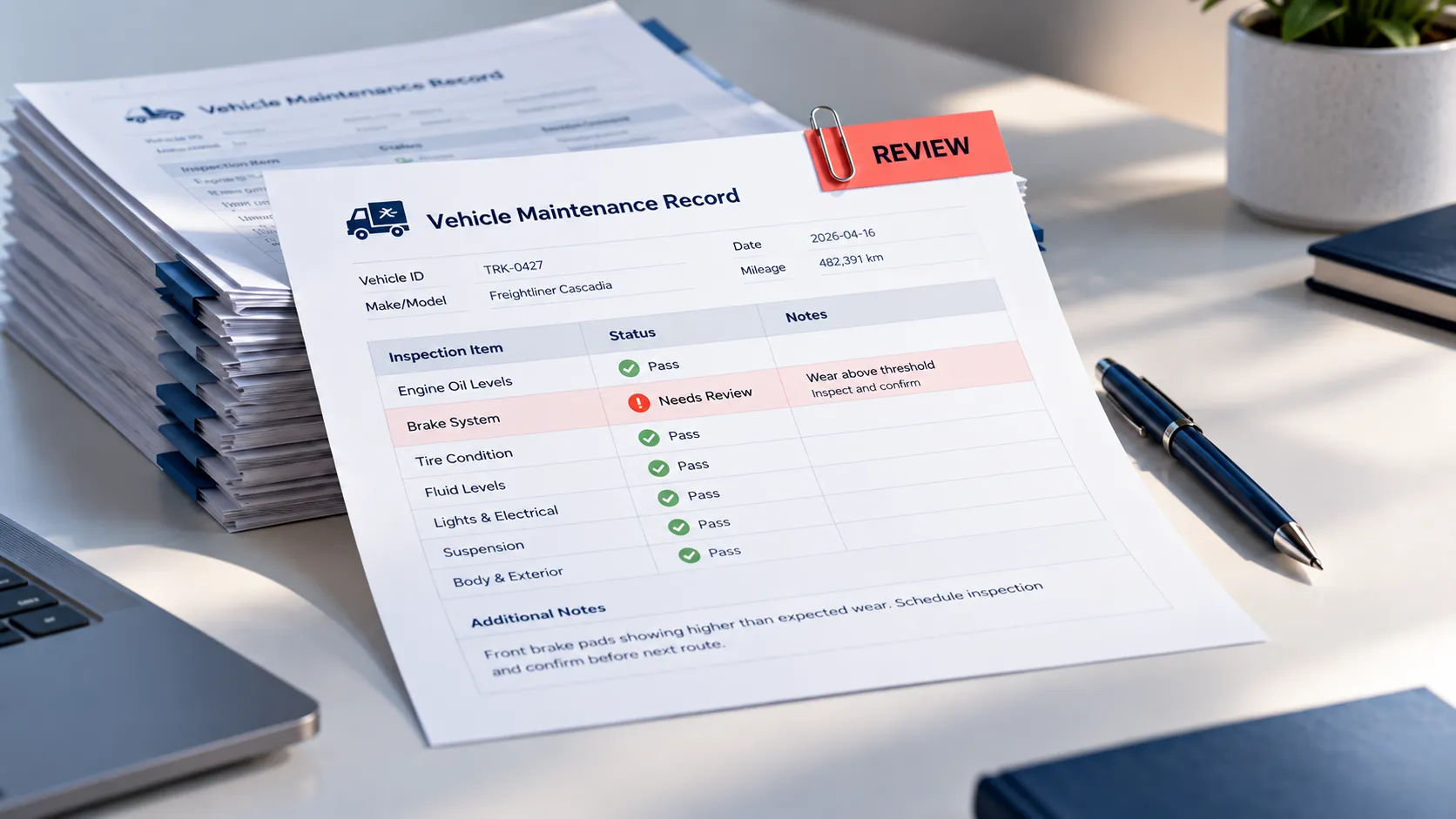

Before you put another tool between your operational records and your team, ask one question: what should happen when those records show something worth reviewing?
For a fleet or logistics leader, that might mean deciding which maintenance records need attention or which emissions records are ready for reporting. Those are different jobs. Neither starts with choosing an AI model.
At Davinci AI Solutions, our position is that most AI pilots fail on design, not technology. That’s a design principle, not a failure-rate statistic. For an owner, the practical response is to pick one named workflow and write the “before” number first.
Four decisions to make before the demo
Davinci’s pilot-discipline framework puts four things ahead of the tool. Use them to turn an interesting proposal into a test someone can run.
- Name the workflow. “Use our fleet data” is too broad. Choose a bounded job, such as preparing records for a maintenance review or assembling emissions data for an existing reporting process. Define where it starts and what counts as finished.
- Write the baseline. Record how the current process performs before changing it. Depending on the job, that could mean preparation time per report, records reviewed per shift or items returned for missing information. Choose a measure your team can actually collect.
- Design the review loop. Decide who checks the output, what needs escalation and what happens when information is missing. A flagged item isn’t a completed decision. Someone still needs authority to act on it.
- Give one operator ownership. Davinci’s framework uses one accountable operator for ninety days, followed by a decision to expand, refine or stop. Name that person before the pilot begins—not after an exception lands between departments.
The point isn’t to create a project binder. It’s to make the proposed change specific enough to judge.
Collected data isn’t the same as an earlier warning
CBC News reported on September 24, 2026, in a story updated September 25, that the Transportation Safety Board of Canada had found data trends suggesting railcar wheel failures could be predicted sooner by making better use of existing data.
The distinction matters. TSB chair Yoan Marier told CBC that wheels were being flagged for immediate replacement at the next stop, but the sensor data wasn’t being analyzed to identify trends between sensors. The recommendation concerned a different use of records already being collected—not simply more collection.
CBC also reported that the investigation found no wheel-condition issues had been identified despite compliance with existing inspection requirements, including multiple visual inspections before the derailment. That doesn’t establish that AI would have caught the defect. Nor does the recommendation demonstrate a deployed AI outcome or a measured safety improvement.
The Alberta connection is specific: the recommendations followed the investigation of a 2023 derailment near Uncas, east of Edmonton. For an Alberta logistics leader, our read is that this is a timely reason to ask whether existing records should trigger an earlier review. It’s not a reason to transfer rail-engineering conclusions to a road fleet.
Preparing a report is a different job
CanadianSME’s October 7, 2026 article describes Geotab’s announcement about integrating J1979-2 into its Clean Truck Check offering. J1979-2 is a protocol for accessing vehicle emissions data; here, its role is to support data collection and preparation within an established compliance workflow.
According to the company announcement, eligible trucks using Geotab’s GO9 family of devices can have the required data collected and prepared through their existing Clean Truck Check process. Geotab says fleets can use the same device and process across supported protocols without manually changing settings or adding a separate tool.
Those are company-reported capabilities and claimed benefits, not independently verified outcomes in the supplied reporting. The article doesn’t provide a measured reduction in administrative time or vehicle downtime.
The scope matters, too. CanadianSME describes Clean Truck Check as applying to heavy-duty vehicles operating in California, including vehicles registered outside the state. This isn’t a general Canadian compliance requirement.
The rail example concerns earlier fault detection. The Geotab example concerns emissions-data preparation. They aren’t one tested approach, and neither establishes that AI is necessary.
What this means for your AI decisions
Our read: evaluate an AI proposal against one inspection or reporting step, not against the ambition to “use more data.” The proposal needs to explain what changes between a record arriving and a person acting.
For a 50–200-person business without an AI team, we’d start with a bounded comparison—not an autonomous operating system.
An illustrative pilot, not a reported result: test whether existing maintenance records can be used to prepare a review queue. A designated supervisor checks every flagged item against the underlying records before deciding what happens next. Keep diagnosis, required inspections and compliance decisions outside the pilot’s authority.
Make the test answerable:
- Use a fixed batch. Compare the current process with the proposed first pass on the same records. Include the time spent correcting and reviewing the output, not just the time needed to generate it.
- Check both flags and omissions. Have a reviewer examine a sample beyond the flagged queue. Otherwise, the test only shows what the tool surfaced—not what it missed.
- Define a safe fallback. Missing records, unclear outputs or an unavailable reviewer should return work to the existing process, not silently clear it.
- Set a stopping rule. Decide in advance what review burden, error level or cost would make the test unsuitable. A faster first pass isn’t enough if verification consumes the saving.
Use only records you’re authorized to process, and confirm permission before sending them to an AI service.
These are proposed design choices, not findings from either article. Neither source tests this pilot or establishes that a review queue can replace inspections or demonstrate compliance. Compare the AI proposal with your existing software or a simpler rule-based approach. Leave room for the answer to be: no AI needed.
Conclusion
The tempting question is what AI could do with your records. The more useful question is which decision those records should support—and who owns it when the output is incomplete or wrong.
You may finish that exercise with an AI pilot. You may finish with a better reporting process and no new model.
The first deliverable isn’t a tool. It’s a decision someone can own.
Looking for a Concrete Next Step?
Ask Davinci AI Solutions about a 60-minute architecture review. Bring one workflow, the records it uses, your current baseline and the person responsible for acting.